Introduction: From Boom to Sophistication
The Dallas-Fort Worth real estate market has undergone a dramatic three-year transformation. From 2021-2022, the region experienced explosive growth characterized by double-digit appreciation, inventory shortages, and unprecedented buyer competition. Today, the market has matured into a more sophisticated, fundamentally-driven ecosystem where institutional capital, market intelligence, and operational excellence determine success.
For investors and developers, understanding this shift is critical. The “easy money” period of rapid price appreciation has ended. What remains is a highly segmented market where premium residential real estate continues to outperform other segments while broader market segments cool.
The Three-Year Timeline: 2023 to 2025
2023: The Peak and the Pivot
- Home Value Growth: -3.0% (first decline after pandemic boom)
- Context: After 19.6% growth in 2021 and 22.4% in 2022, the market corrected sharply
- What Happened: Rising interest rates (Fed increased rates from 0% to 5.25-5.50% by end of 2023), affordability crisis for middle-income buyers, inventory finally began to increase
- Luxury Segment Performance: Luxury homes ($1M+) posted +28% sales growth while overall market was flat — clear divergence emerging
2024: Bifurcation Becomes Clear
- Overall Market: Essentially flat (+0.1% growth)
- Inventory: Days on market increased to 72 days (vs. 44 days in 2022)
- Population Growth: DFW added 178,000 residents despite housing cost pressures
- Luxury Market Surge: Luxury homes led with $8.5 billion in transaction volume (4,992 homes sold), representing +14% YoY growth
- Interest Rates: 30-year mortgage rates held at 6.8%-7.0%
2025: Confirmation and Momentum Build
- Overall Market Performance: -2.1% decline (moderation from 2023-2024, establishing new baseline)
- Inventory Stabilization: Active listings peaked in Q2 2025 at 29,000+ homes; moderated through Q3-Q4 as seasonal demand returned
- Luxury Segment Dominance: Confirmed at +14-16% annual growth solidifying premium residential as the only expanding segment
- Average Price/Sq Ft: Luxury homes increased 8% YoY by year-end, establishing new valuation baseline for 2026
- Sales Momentum: Sales activity accelerated significantly in Q4 2025, with momentum carrying into Q1 2026 as market clarity crystallized
- Mortgage Rates Stabilization: Declined from 7.0% peak to 6.03% by year-end, settling at expected 5.9-6.1% range entering 2026
The Luxury Segment: Where Growth Concentrates
While the broad DFW market has cooled from pandemic peaks, the premium residential segment ($1M+) tells a different story:
| Metric | 2024 | 2025 | Trend |
| Million-Dollar Home Sales | 4,992 homes | Exceeded projection | +14-16% YoY |
| Luxury Sales Volume | $8.5B | Sustained growth | Growing consistently |
| Market Share | 19% of DFW volume | Expanding | 38.7% of all Texas luxury sales |
| Cash Buyers | 46.5% | Remained dominant | Insulated from rates |
| Average Price/Sq Ft | $394 | Premium established | vs. $204 for all DFW |
Key Insight: While middle-income buyers struggle with affordability (homes 21-22% overvalued), luxury segments ($1M+) benefit from:
- Cash buyer dominance (46.5%) — insulated from interest rate volatility
- Migration of high-net-worth individuals from coastal states seeking tax efficiency
- Corporate relocations (Goldman Sachs, Toyota, Charles Schwab) bringing C-suite buyers
- Architectural heritage and exclusivity in neighborhoods like Lakewood, Highland Park, Uptown
Market Dynamics: Supply and Demand Fundamentals
Housing Supply Constraints
Throughout 2025, despite inventory increases, the market proved to remain supply-constrained at premium price points:
- Single-family construction down 11% YoY — builders have deprioritized affordable units
- New construction permits: 225,000 in 2025 (highest nationally), but concentrated in $400K+ segment
- Infill luxury development: Limited availability in established premium neighborhoods (Lakewood, Highland Park) drives values
- Middle-market squeeze: Shortage of homes in $300K-$600K range where affordability crisis is deepest
Migration and Population Growth
DFW remained a migration magnet throughout 2025 despite housing cost pressures:
- Population growth: 178,000+ residents added through 2025; cumulative trend shows 1M+ additional residents projected by 2030
- Demographic profile: Young families, tech professionals, corporate executives relocating from California, New York, Northeast
- Employment drivers: Tech sector expansion, financial services (Wells Fargo, Goldman Sachs presence), healthcare, energy
- Attraction factors: 0% state income tax, pro-business environment, cost of living relative to coasts, family amenities
Relevance to Premium Residential: High-income in-migrants continue to concentrate in luxury markets. Premium residential developments are optimally positioned to capture this demographic shift.
Interest Rates and Financing: The Foundation for Investment
Current Mortgage Environment (January 2026)
- 30-year fixed mortgage: 6.03% (down from 7.0% mid-2024 peak)
- Trend: Stabilized after volatility; market has found equilibrium rate
- Historical context: Today’s 6% rates are above long-term average of 4.5%, but represent significant moderation from 2024 peaks
Impact on Market Segments
| Segment | Impact | Dynamic |
| Entry-level (<$300K) | Severe | Affordability crisis; buyers need $140K+ income |
| Middle-market ($300-$600K) | Significant | Weakest performer; -8.1% sales decline through 2025 |
| Luxury ($1M+) | Minimal | 46.5% cash buyers bypass rate sensitivity entirely |
Investment Implication: First-lien debt on luxury residential projects is well-positioned because buyer financing is less rate-dependent. Secured 8% returns compare favorably to current mortgage rates while leveraging real estate collateral in demand-strong segment.
The Brickment Opportunity: Positioning in Market Dynamics
Current Portfolio & Scaling Plans
- Current Projects: 30 investors backing $40M in ongoing builds (completed through 2025)
- Current Capacity: 15 homes/year (delivered 2025)
- Scaling Target: 20-25 homes/year (33-67% increase for 2026 forward)
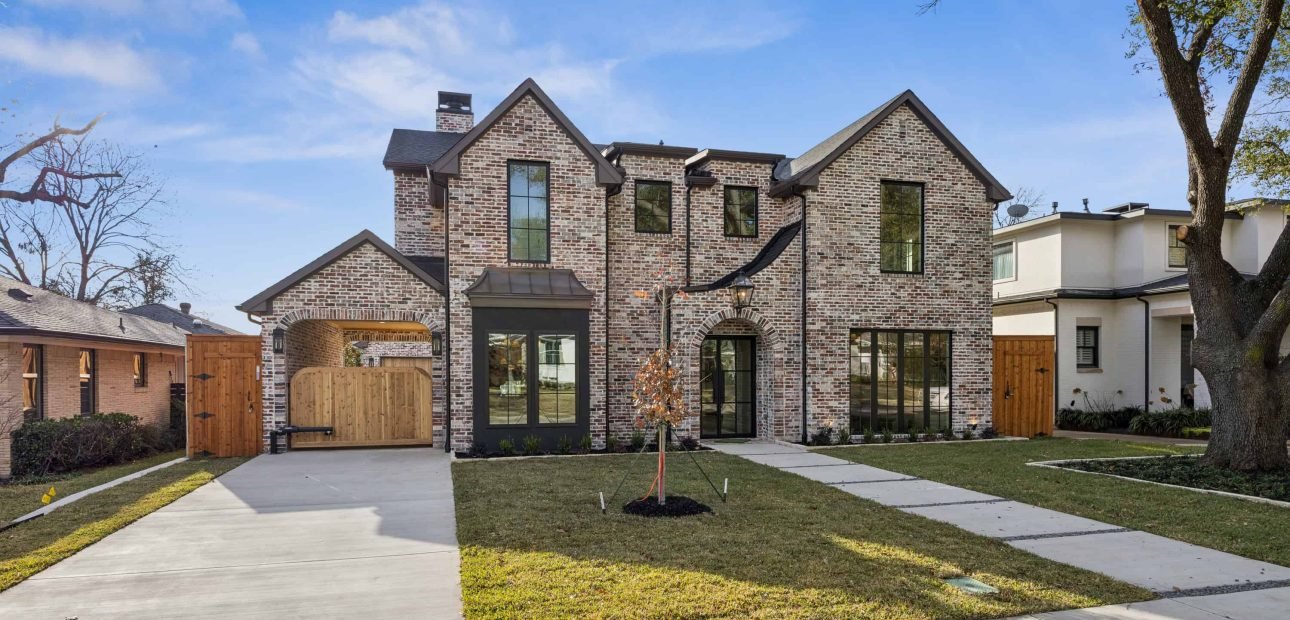
- Market Fit: All projects concentrated in premium Lakewood market ($1M+ price point) where demand remains strong
Why 2026 Is the Right Time
- Market Correction Complete: The 2025 adjustment phase concluded successfully. Overall DFW market has stabilized at -2.1% baseline. Luxury segment has proven resilience with consistent +14-16% growth throughout the year.
- Interest Rate Clarity Established: Mortgage rates settled at 6.03% by year-end. Buyers have fully adapted to this environment. The uncertainty about future rate movements has resolved, enabling clear underwriting for new projects.
- Sales Acceleration Confirmed: Q4 2025 momentum into Q1 2026 validates that luxury home sales surge was real, not temporary. Days on market declining for premium properties confirms strengthening fundamentals.
- Supply-Demand Imbalance Locked In: Construction down 11% YoY through 2025. Lakewood infill development remains bottlenecked by zoning and lot availability — competitive advantage is now entrenched.
- Capital Formation Moment Arrived: Institutional capital is actively seeking premium residential exposure entering 2026. Debt fund positioning (8% secured returns) is perfectly timed for sophisticated investors.
Conclusion: Three Years of Market Evolution
The Dallas market of 2026 is fundamentally different from the 2021-2022 boom period. The three-year adjustment (2023-2025) has definitively separated viable opportunities from speculative bets. This market demands expertise, capital efficiency, and operational excellence.
Brickment’s positioning — focusing exclusively on luxury infill development in supply-constrained Lakewood market, backed by proven team and conservative debt structure — aligns precisely with where institutional capital is now actively deploying.